There are many different levels of Ecology.
1.Individual
2.Population (individuals of same species)
3.Community (collected of populations)
4.Ecosystem (habitat + community = ecosystem)
5.Biome
6.Biosphere
Illustrated:

Examples of Biomes: Tropical Rainforest, Tundra, Desert, Savannah, Kelp forest
----------------------------------------------------------------------------
Factors Influencing Ecology:
Abiotic Factor
Temperature
Rainfall
Light Intensity
Salinity (salt content)
Secondary
Wind speed
Humidity
Wave action
pH
Biotic Factors
Competition with other organisms
Abundance of prey
Presence of predator
--------------------------------------------------------------------------------
Example of a ROCKY SHORE System - ABIOTIC factor examples
Characteristics (abiotic factors)
-Highly Dynamic (subjected to wave action)
-Large variation in temperature, salinity, oxygen content, pH, water availability
-Predators gain easy access to rocky shore organisms when tides return
-Likewise, when tides recede, birds prey on exposed organisms
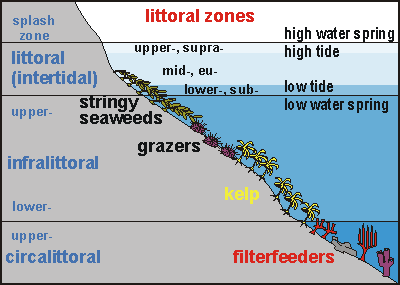
-TIDE ZONES-
Supratidal zone (above highest level of tide)
-Organisms that can move around
-Crabs
-Hate water (absorb humidity from sea water)
Intertidal zone (between lowest and highest level of tide)
-Able to withstand dehydration
-Barnacles have calcium shells which they hide in when it is too hot.
-They cling to the rocks tightly to avoid getting washed away.
-Robust osmoregulatary (salt level control) systems
Subtidal done (below lowest level of tide)
-Unable to withstand dehydration
-Seaweed
----------------------------------------------------------------------------------
Ecological Interactions: Commensalism, Mutualism,
Mutualism (+ +)
-Both organisms benefit from this interation
Commensalism (+ 0)
-One organism benefits from this interaction, and the other is not affected
Mutualism
Clownfish – Sea Anemone
-Sea Anemone provides protection for Clownfish
-Clownfish help clean up scraps of food in Sea Anemone
Ants – Aphids
-Ants protect aphids from other predators
-Aphids suck out juice from plants for ants
Egyptian plover – Crocodile
-Egyptian plover cleans the teeth of the crocodile
-Crocodile provides food for Egyptian plover (in teeth)
Cleaner Shrimps – Eels
-Cleaner shrimps cleans the fish
-Eels provide food for cleaner shrimps
---
Commensalism
Epiphytes (climbers, ferns) – Rain trees
-Epiphytes gets to be high up for sunlight
Cattle Egret – Cattle
-Cattle Egret eats worms off Cattle (worms do not affect Cattle)
Barnacles – Scallop
-Barnacles attach to Scallop
Remora – Shark
-Remora attaches to shark to move around without any effort
-Also offers protection

No comments:
Post a Comment